

Quick answer
Looking for edible mushrooms Massachusetts foragers actually find? The reliable ones are morels in spring, chanterelles and black trumpets in summer, and hen of the woods, chicken of the woods, oysters, and lion's mane from late summer through fall. Good ground includes oak-heavy hardwood forests and hemlock groves in spots like Mohawk Trail State Forest, Mount Greylock, the Middlesex Fells, and the Blue Hills. The season runs roughly April through November. The one rule that matters most: never eat a wild mushroom unless an expert has confirmed the ID, because Massachusetts has deadly look-alikes. We are a South Boston wellness shop, not a foraging authority, so treat this as a friendly starting guide and lean on a local mycological club for hands-on confirmation.
If you want to find edible mushrooms Massachusetts woods are full of, three things decide your success: knowledge, timing, and knowing the local habitats. Foraging here is a genuinely rewarding way to connect with the land and your own food, and the best window runs from about April through November when wild mushrooms are at their peak. We get asked about this a lot at the shop, usually by people who love mushrooms and want to understand the wild side of them, so we pulled together an honest, beginner-friendly guide. One thing first, and we mean it: we are deVINE Wellness, a boutique shop, not a mycologist. Use this to learn, then confirm every find with an expert before anything reaches your plate.
What it takes to forage well here
Foraging is part skill, part patience. Weather drives everything, since mushrooms fruit when conditions are damp and humid, so the days after a good rain in spring or fall are usually your best bet. Learning to read habitat is the other half of the game. Many prized species form partnerships with specific trees, so once you know that chanterelles associate with hardwood and hemlock roots, or that hen of the woods favors the base of old oaks, you stop wandering and start looking in the right places.
Massachusetts is a rich environment for this, home to a couple thousand mushroom species, only a fraction of which are considered edible. That diversity is exciting and, frankly, overwhelming for beginners, which is exactly why we keep pointing people toward local mycological clubs. The goal is not just a full basket. It is building real knowledge of the land and the fungi that live in it.
The edible mushrooms you are most likely to find
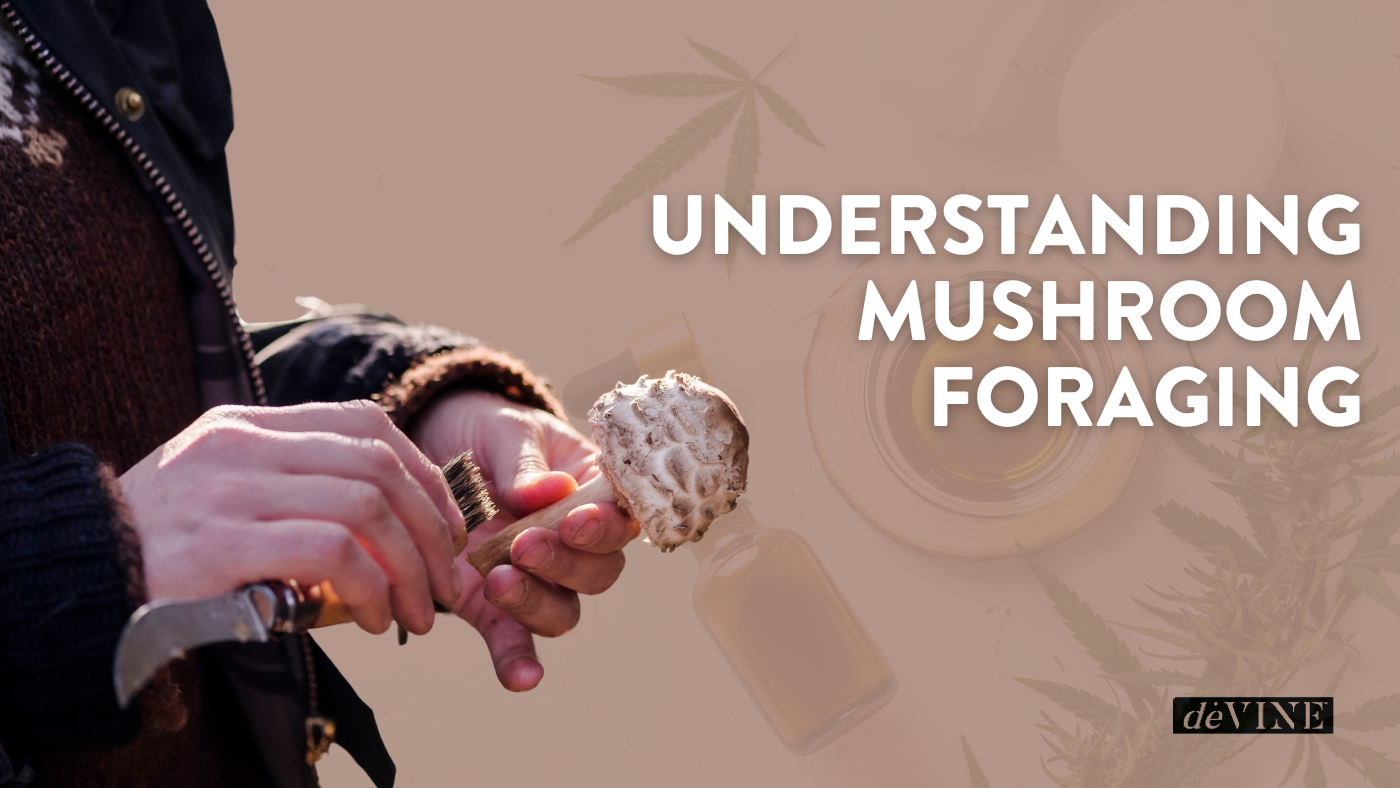
Massachusetts woodlands, forests, and parks support a satisfying range of edible species. Here are the ones worth knowing first, with their scientific names so you can cross-check them in a field guide.
- Morel (Morchella species): The honeycomb-capped spring prize, with a meaty texture and rich, nutty flavor. Found in woodland areas, often near ash, elm, and apple trees. Its hollow interior is a key ID feature.
- Chanterelle (Cantharellus species): Bright yellow-orange, vase-shaped, with a fruity, apricot-like aroma and a mildly peppery taste. Grows in mycorrhizal partnership with hardwood and hemlock roots.
- Hen of the Woods (Grifola frondosa): Also called maitake. A large, frond-like cluster found at the base of oaks in fall, with a robust, earthy flavor. Not to be confused with chicken of the woods.
- Chicken of the Woods (Laetiporus species): Bright orange shelves with yellow edges, growing on living or dead hardwoods, often oak. Lemony and meaty, but always cook it thoroughly, and note some people react to it.
- Oyster (Pleurotus ostreatus): Fan-shaped, white to grey, growing in overlapping clusters on dead and dying hardwood. Mild, delicate, and one of the friendlier species for beginners.
- Black Trumpet (Craterellus species): Dark, trumpet-shaped, easy to miss against the leaf litter in moist beech and oak woods. Rich and smoky, prized by cooks.
- Lion's Mane (Hericium erinaceus): Unmistakable cascading white spines on dead or dying hardwoods. A seafood-like flavor often compared to crab or lobster.
Each of these brings something different to the table, which is half the fun of learning them. If your interest in lion's mane is more about its wellness reputation than the dinner plate, that is a different lane, and you can read more in our overview of what science says about mushrooms and wellness.
Here is a quick reference you can scan before a walk, pairing each species with the habitat and feature that helps you spot it.
| Mushroom | Habitat | Standout feature |
|---|---|---|
| Morel | Woodlands near ash, elm, apple | Honeycomb cap, hollow inside |
| Chanterelle | Hardwood and hemlock roots | Yellow-orange, vase shape, fruity smell |
| Hen of the Woods | Base of old oaks | Large frond-like cluster |
| Oyster | Dead and dying hardwood | Fan-shaped, overlapping clusters |
| Lion's Mane | Dead and dying hardwood | Cascading white spines |
The serious risk: poisonous look-alikes
This is the part we will not soften. Massachusetts is home to well over a hundred poisonous mushroom species, including the genuinely deadly Destroying Angel and Death Cap (Amanita species). Some of their toxins are not destroyed by cooking, and a single serious mistake can cause organ damage or death.
The danger is that toxic species can closely mimic edible ones. The classic example is the Jack-O-Lantern, which beginners confuse with chanterelles, though it has true gills, an unpleasant smell, and faintly glows in the dark. Misidentification is, by a wide margin, the leading cause of mushroom poisoning. A review of national data found that the great majority of reported mushroom exposures came down to people mistaking a toxic species for an edible one, which is exactly why outside confirmation matters so much. You can read the research summary on mushroom poisoning epidemiology in the United States for the full picture.
| Edible target | Risky look-alike | A telling difference |
|---|---|---|
| Chanterelle | Jack-O-Lantern | Jack-O-Lanterns have true gills, a bad smell, and grow in clumps on wood |
| Any white-gilled find | Destroying Angel / Death Cap | Amanitas often have white gills, a stem ring, and a bulb at the base; avoid entirely |
| Morel | False morel | True morels are completely hollow inside; false morels are not |
The North American Mycological Association keeps current resources on toxic species and what to do in a suspected poisoning. We link their toxicology guidance because it is the kind of authority worth bookmarking before you ever pick anything. If you suspect a poisoning, contact poison control or a physician right away.
"There's an old foragers' saying we like: there are old mushroom hunters and bold mushroom hunters, but no old, bold mushroom hunters. When in doubt, throw it out, and never let flavor talk you past a shaky ID."
The deVINE team
Where to look: forests, parks, and reservations
Massachusetts state forests are some of the best ground for foraging. Mohawk Trail State Forest and Mount Greylock State Reservation are renowned for mushroom diversity, with forest floors of fallen leaves and decaying wood that fungi love. The damp, shaded zones near oaks and along trails tend to be the most productive.
Closer to the city, local parks deliver too. The Middlesex Fells Reservation and Blue Hills Reservation both hold a good range of edible fungi. Oak, beech, and hemlock in these spots form the tree partnerships that point you toward chanterelles, oysters, and more. Many regional groups run guided walks in exactly these places, which is the best way for a beginner to learn the terrain safely.
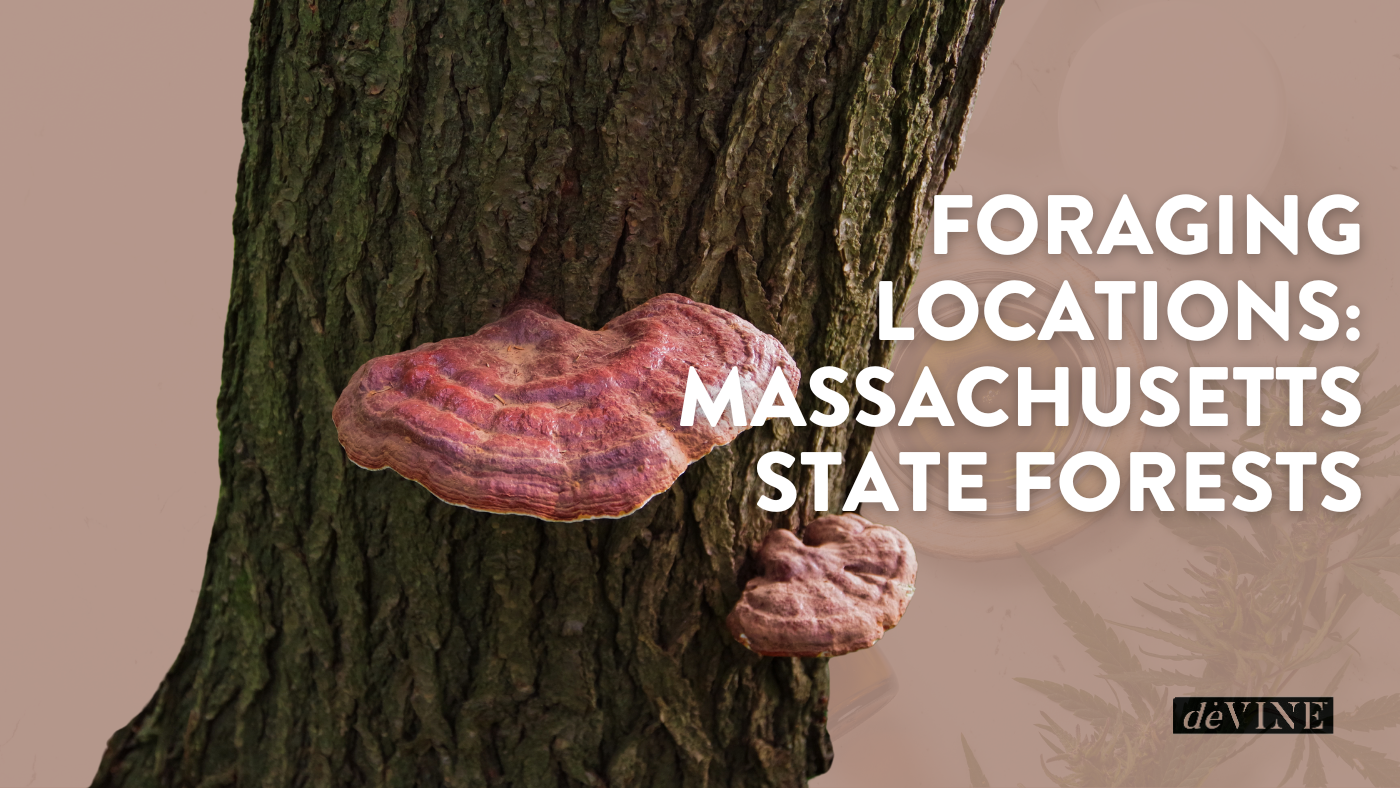
Out in Western Massachusetts, the diversity ramps up further. Morels turn up in moist soil near elm, ash, and apple, chanterelles in their hardwood partnerships, and oysters on dead and dying beech and oak. The state forests out there, with their varied tree associations, are popular destinations for serious foragers.
One honest correction worth making, since older guides sometimes blur this: along the coast you will find edible mushrooms like oysters and maitake on dead hardwoods near coastal forests and wetlands, but salt-marsh plants such as sea beans and beach peas are not fungi at all. They are edible wild plants, a separate foraging category. We mention it only so you keep your categories straight while you learn.
When to look: a season-by-season calendar
Different mushrooms have their moments across the year, so timing your outings to the species you want pays off.
| Season | What is fruiting | Where to focus |
|---|---|---|
| Spring (Apr to Jun) | Morels | Moist woodlands near ash, elm, apple |
| Summer (late Jun to Aug) | Chanterelles, black trumpets | Hardwood and hemlock stands after rain |
| Fall (late Aug to Oct) | Hen of the woods, chicken of the woods, oysters, lion's mane | Base of oaks, dead hardwoods |
Oysters are a bit of an exception, since you can find them across much of the year, with a bump in cooler months. Lion's mane tends to show in late summer and fall. Cool temperatures and steady moisture are the conditions that bring the underground mycelium to fruit, so watching the forecast is a real foraging skill.
To put numbers on it, the sweet spot for most fruiting falls in cool, damp conditions, roughly the fifties to low seventies in Fahrenheit, with consistent moisture in the soil. That is why the rainy stretches of spring and fall are so productive: the moisture feeds the mycelium, the hidden underground network the mushrooms fruit from. The flip side is that long dry spells can push that mycelium dormant, and sudden temperature swings can stress the fungi and slow things down. A forager who tracks rainfall and temperature, then heads out a few days after a soaking rain, is simply playing the odds well.
Gear that makes a difference
You do not need much, but a few items earn their place in the basket. A mushroom knife with a built-in brush lets you cut cleanly at the base and whisk off debris without damaging the find or the mycelium below. A reliable field guide is non-negotiable for on-the-spot identification. A basket beats a bag, since it lets air circulate, keeps delicate mushrooms from crushing, and lets spores drop as you walk, which helps future growth. Round it out with sturdy shoes, long pants, and weather-appropriate layers, because thorns, bugs, and mud are part of the deal.
Identification tools: apps and books
Good tools make foraging safer. Apps like iNaturalist and its Seek companion offer photo recognition and community-based identification in real time, which is handy in the field. Treat them as a first pass, not a final word, since no app should be the only thing standing between you and a toxic look-alike.
Books go deeper. Regional references such as Timothy J. Baroni's guide to mushrooms of the Northeastern United States and David W. Fischer's field-to-kitchen guide to edible wild mushrooms of North America give you the detailed photos, descriptions, and key features that careful identification requires. Using an app and a book together, plus a knowledgeable human when you can, is the layered approach that keeps you safe.
The rules: foraging laws in Massachusetts
Before you head out, know the ground rules, because they genuinely vary. As a general matter, small-scale personal-use foraging is allowed on many Massachusetts public lands, but it is not a blanket free-for-all. Individual state parks, forests, and reservations can set their own restrictions, certain areas are protected, and rare or endangered species are off limits to collect. The Department of Conservation and Recreation oversees most of this land, so the safest move is to check the rules for the specific property before you forage. The state's own guide to recreation in state parks is the right starting point.
Two firm lines worth remembering: foraging on private property requires the landowner's permission, since trespassing laws are enforced, and harvesting to sell, rather than for personal use, generally requires separate authorization. When in doubt, call the park office. A two-minute phone call beats a fine.
Foraging etiquette and conservation
Foraging well means leaving the woods as healthy as you found them. Get permission before foraging on private land. Leave some mushrooms behind so populations can regenerate and so the wildlife that depends on them is not shortchanged. Follow leave-no-trace habits, take only what you will actually use, and learn which rare species to avoid touching at all. These are not just nice-to-haves. Sustainable habits are what keep this possible for the next forager and the next generation.
Harvesting, storing, and cooking your finds
Harvest in the morning when mushrooms are freshest and their features are clearest. Cut at the base rather than ripping, which keeps your haul cleaner and supports regrowth. A mesh bag or basket lets spores escape as you go.
For storage, keep fresh mushrooms in a paper bag in the fridge so they can breathe, and resist washing them until you are ready to cook, since excess moisture speeds spoilage. For a bigger haul, drying and freezing both work well: slice thinly and dry in a warm, well-ventilated spot before sealing in an airtight container, or blanch briefly before freezing in bags. Proper storage is its own skill, and the same light-temperature-moisture logic applies across a lot of natural products, which we dig into in our guide to storing cannabis, kratom, and mushrooms.
In the kitchen, clean and prepare your mushrooms properly, then cook them through. Sautéing, roasting, and adding them to soups, stews, pasta, or risotto all bring out their flavors. Chanterelles play beautifully against a creamy risotto, while morels add depth to an omelet or stew. Cooking wild mushrooms thoroughly is also a safety step, not just a culinary one.
Learn with a community: clubs, walks, and workshops
If there is one piece of advice we would underline, it is this: do not learn alone. Local groups turn foraging from a risky solo guessing game into a guided, social, far safer pursuit. Experienced foragers can teach you to tell a chanterelle from a Jack-O-Lantern in seconds, which is the difference that protects you.
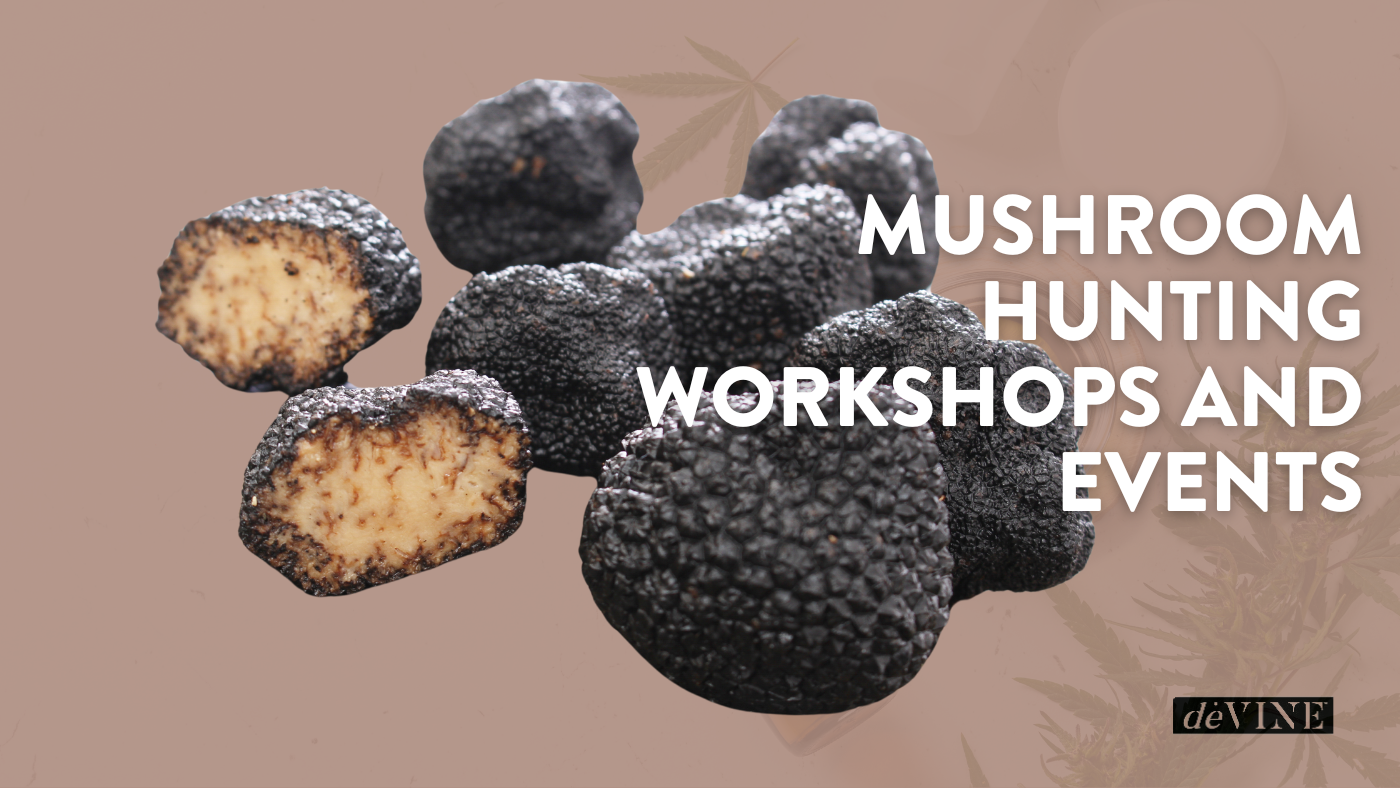
Massachusetts has real resources here. The Boston Mycological Club and the Massachusetts wing of the broader mycological community run forays, classes, and identification help. Mass Audubon organizes guided mushroom walks and educational events across the state. Local farms and wild-foods educators offer cultivation workshops and foraging classes. Online forums and social groups round it out, though nothing replaces a knowledgeable person standing next to you in the woods. Joining one of these is the single best step a beginner can take.
Why people love foraging their own
Beyond the obvious thrill of a free, wild meal, foraging has real upsides. The flavor of fresh wild chanterelles or morels is in a different league from most store-bought options. It deepens your connection to the local landscape and the relationships between trees, soil, and fungi. It gets you walking, bending, and exploring, which is good for the body. And it puts you in control of your food source, free from the chemicals sometimes used in commercial growing. Wild mushrooms are also nutritious, bringing fiber and various nutrients to the table.
Wild foraging versus what we carry at the shop
Here is a distinction we think is important to draw clearly, because the old version of this topic blurred it. Wild culinary foraging is about gathering edible food mushrooms like morels and chanterelles in the woods. That is a separate world from the mushroom products on our shelves.
At deVINE we carry lab-tested, legal mushroom products, including functional mushroom gummies built around species like lion's mane and reishi for everyday wellness, and our legal, psilocybin-free magic mushroom selection. These are tested, clearly dosed, and sourced from reputable makers, which is a different kind of confidence than identifying a wild mushroom yourself. We would gently steer you away from any product whose contents or testing are murky. If a brand or batch ever made headlines for undisclosed ingredients or recalls, that is exactly the kind of thing we will not stock. You can browse what we do carry in our magic mushroom collection, with published testing on our lab reports page.
About deVINE Wellness
We are a boutique alternative-wellness shop in South Boston, started by three friends on a mission to re-deVINE cbd, cannabis, health, and wellness in Boston. We are not a big-box marijuana dispensary. We are a curated shelf of hemp-derived THC, magic mushrooms, CBD, kratom, kava, blue lotus, alcohol-free functional beverages, pleasure and wellness products, and pet products. Our store at 619 E Broadway is open 10am to 10pm, seven days a week, and we ship nationwide where products are legal, with recycled packing materials and free shipping over a set threshold.
For a topic like foraging, our role is simple: cheer you on, keep you honest about the risks, and be a trustworthy place for the lab-tested mushroom products we do sell. If you have questions about any of those, our team is happy to help in person or through our contact page.
Frequently asked questions
Where is the best place to find edible mushrooms in Massachusetts?
Oak-heavy hardwood forests and hemlock groves are the most productive, especially the damp, shaded areas near tree roots and along trails. State forests like Mohawk Trail and Mount Greylock, and reservations like the Middlesex Fells and Blue Hills, are popular for good reason. Always confirm identification before eating anything.
What is the mushroom foraging season here?
Roughly April through November. Morels arrive in spring, chanterelles and black trumpets in summer, and hen of the woods, chicken of the woods, oysters, and lion's mane from late summer into fall. The days after a good rain are usually the best times to head out.
How do I know if a wild mushroom is safe to eat?
You confirm it with an expert. Look at habitat, shape, gills or pores, smell, and spore print, and cross-check against a quality field guide, but the safest path is having a knowledgeable forager or mycological club verify your find. Massachusetts has deadly look-alikes, so never eat anything you are not completely sure about.
Do I need a permit to forage in Massachusetts?
For small-scale personal use, many public lands allow it, but rules vary by property and some areas are restricted, so check with the specific park or the Department of Conservation and Recreation first. Private land always requires the owner's permission, and selling foraged mushrooms generally requires separate authorization.
What are the most dangerous mushrooms to watch out for?
The Destroying Angel and Death Cap, both Amanita species, are potentially deadly and their toxins survive cooking. The Jack-O-Lantern is a common chanterelle look-alike. When a find has white gills, a ring on the stem, and a bulb at the base, treat it as a hard no unless an expert says otherwise.
Is foraging the same as buying mushroom products from your shop?
No. Foraging is gathering wild edible food mushrooms outdoors and depends entirely on your own identification skills. The products we sell, like functional mushroom gummies and legal psilocybin-free options, are lab-tested, clearly dosed, and sourced from reputable makers. They are different activities with different kinds of safeguards.
The bottom line
Foraging for edible mushrooms Massachusetts has to offer is a genuinely rewarding way to spend a season, from spring morels to fall hen of the woods, as long as you respect the real danger of toxic look-alikes and the rules of the land. Learn the habitats, time your outings to the weather, lean on a local club, and never let a tempting find override an uncertain ID. Get those right and the woods become a generous, fascinating place.
And if you would rather enjoy mushrooms the easy, tested way, that is what we are here for. Browse our lab-tested mushroom collection, or stop by the shop on East Broadway and let our team help you find something that fits, with the testing and dosing already sorted out for you.